Gouache
Gouache is the first paint Chico da Silva used on paper. He received it from Jean-Pierre Chabloz in 1943, along with sheets of bristol board, and it was in gouache that he painted the works chosen for the 1966 Venice Biennale.
Gouache, from Chabloz to Venice
To see what the draughtsman of the walls would do on paper, Chabloz commissioned works and supplied the materials: bristol sheets, gouache, India ink, pastel, colored pencils, pens and brushes. He refused to teach oil painting, which he judged too heavy and opaque for the painter’s visions. At the Museu de Arte da Universidade Federal do Ceará, in the 1960s, Chico painted about forty gouaches, and twelve of them were chosen for the 1966 Venice Biennale, where he received an honorable mention.
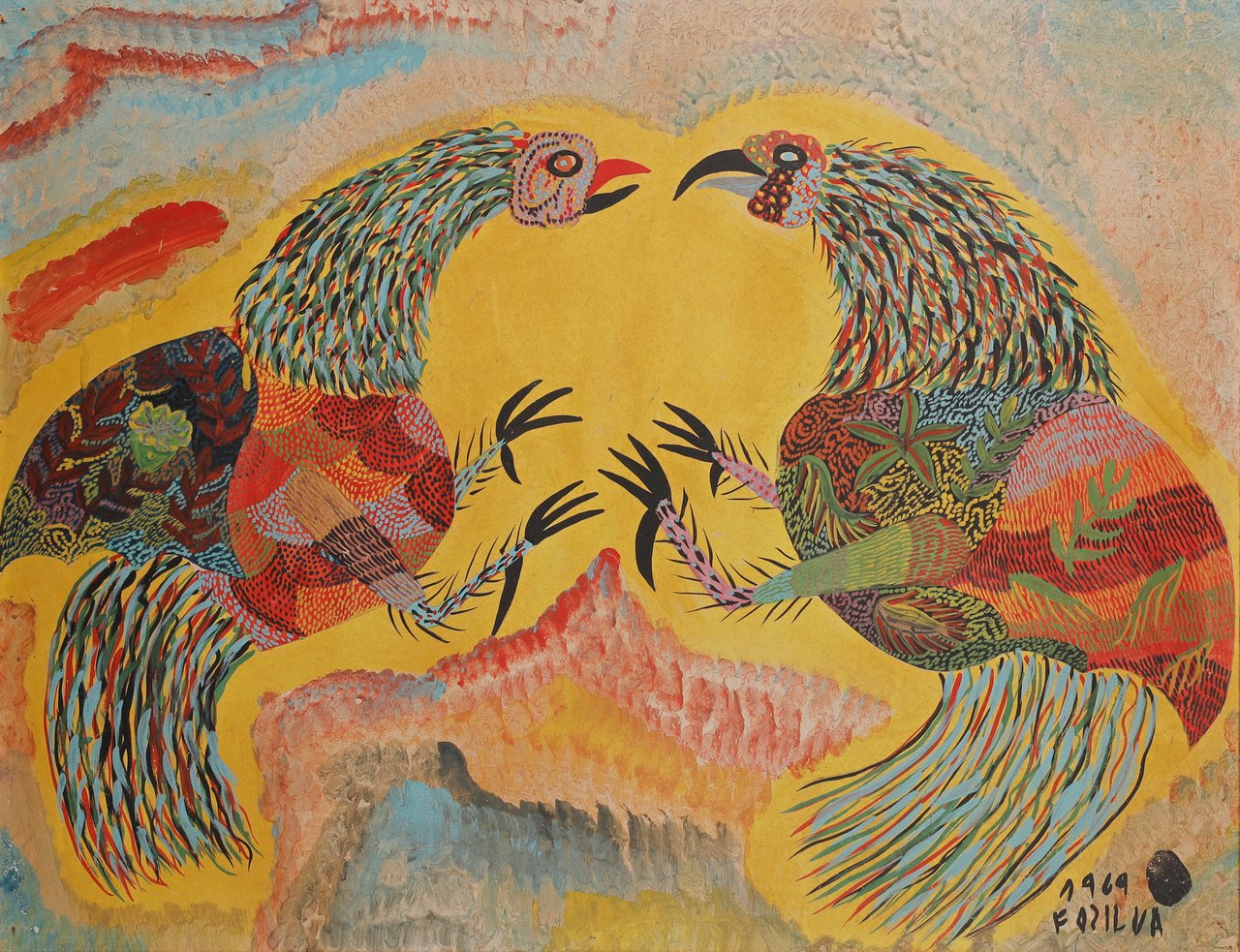
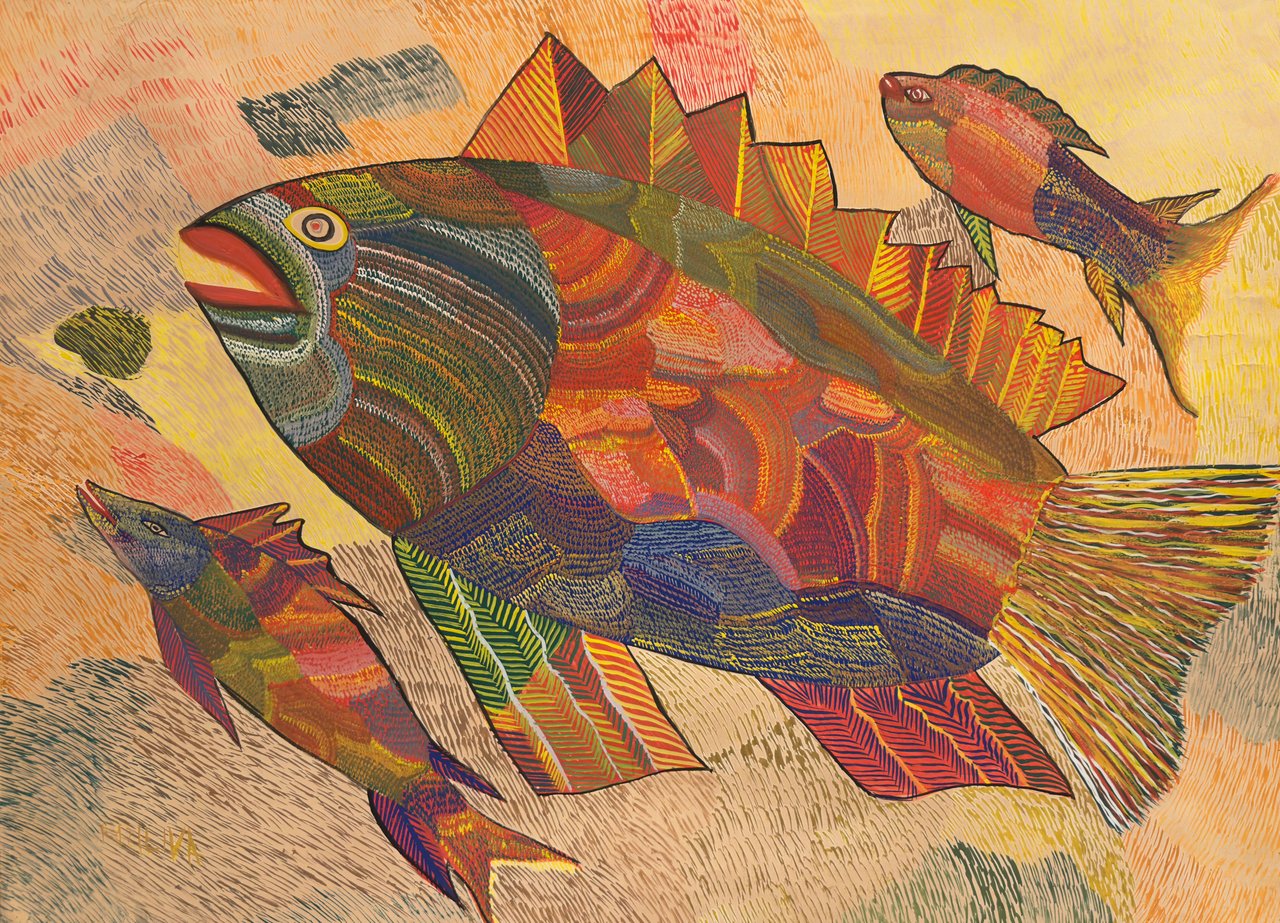
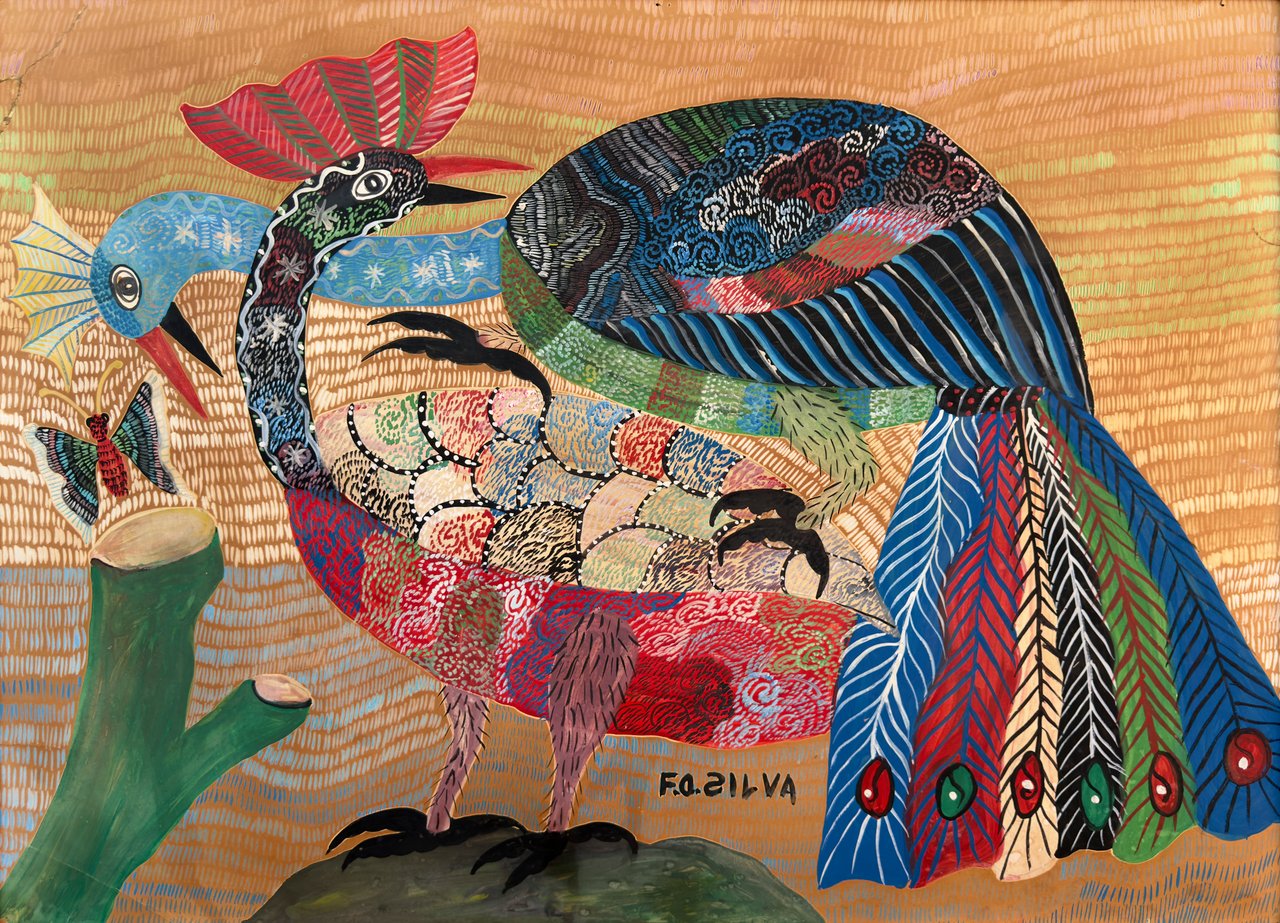
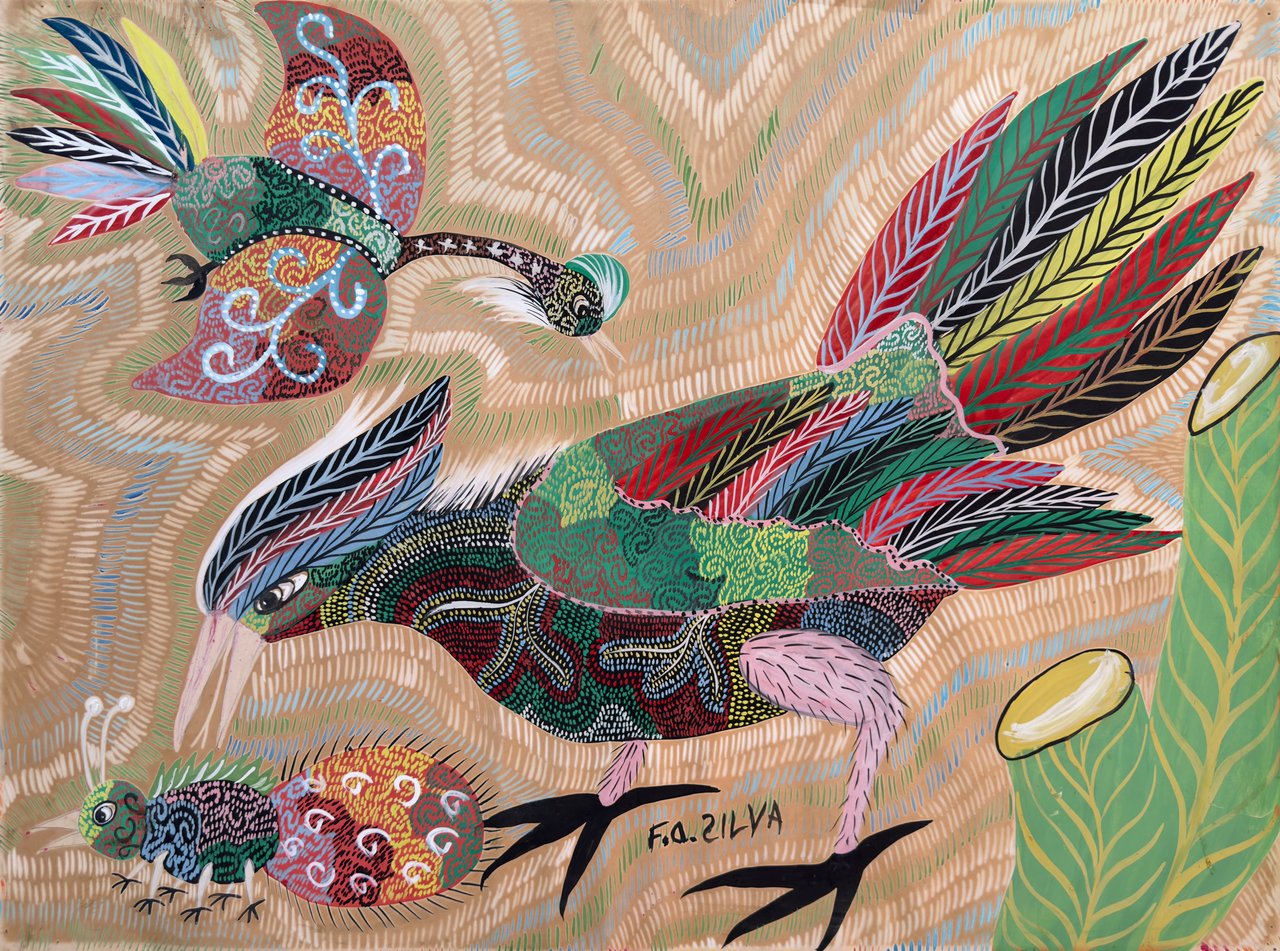
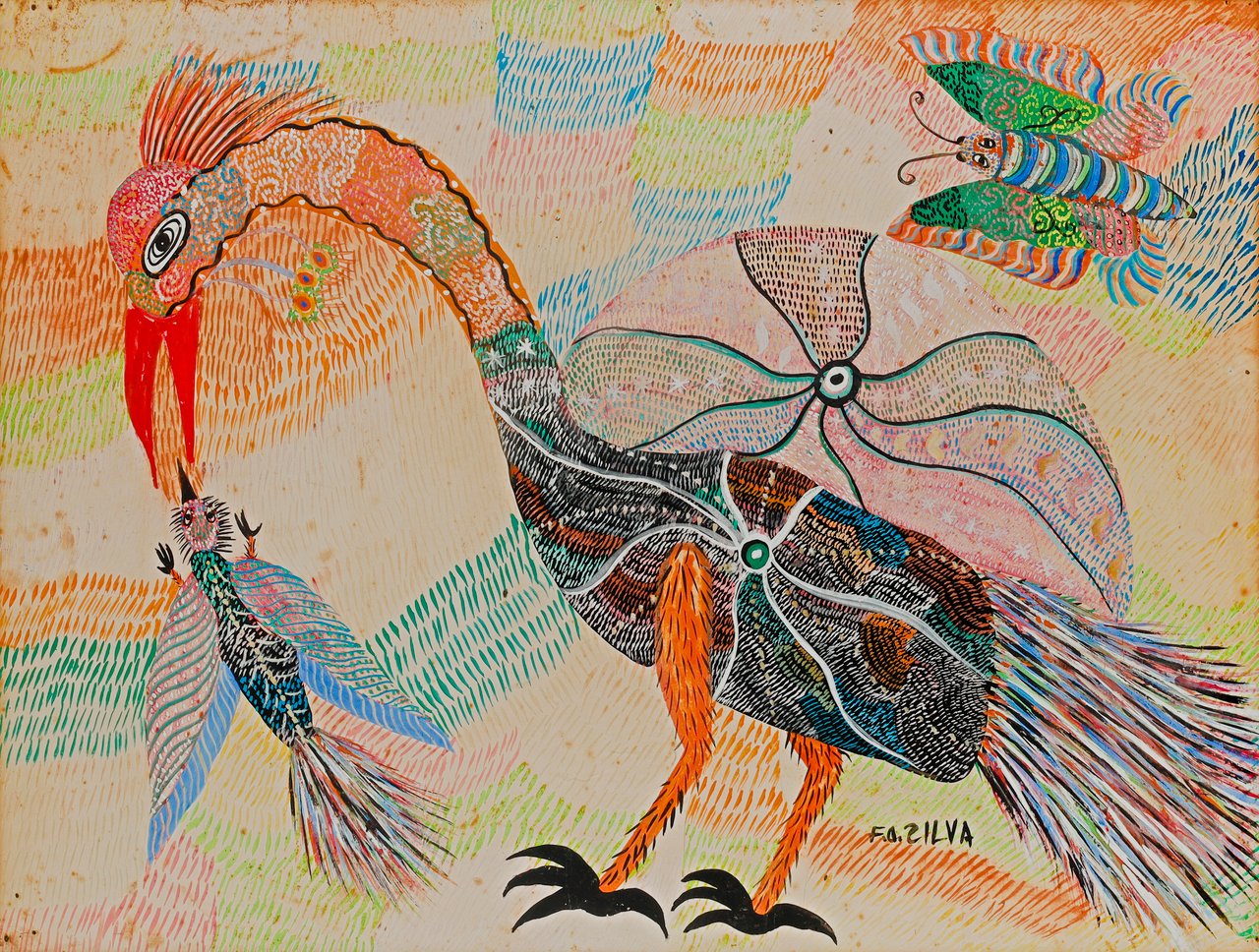
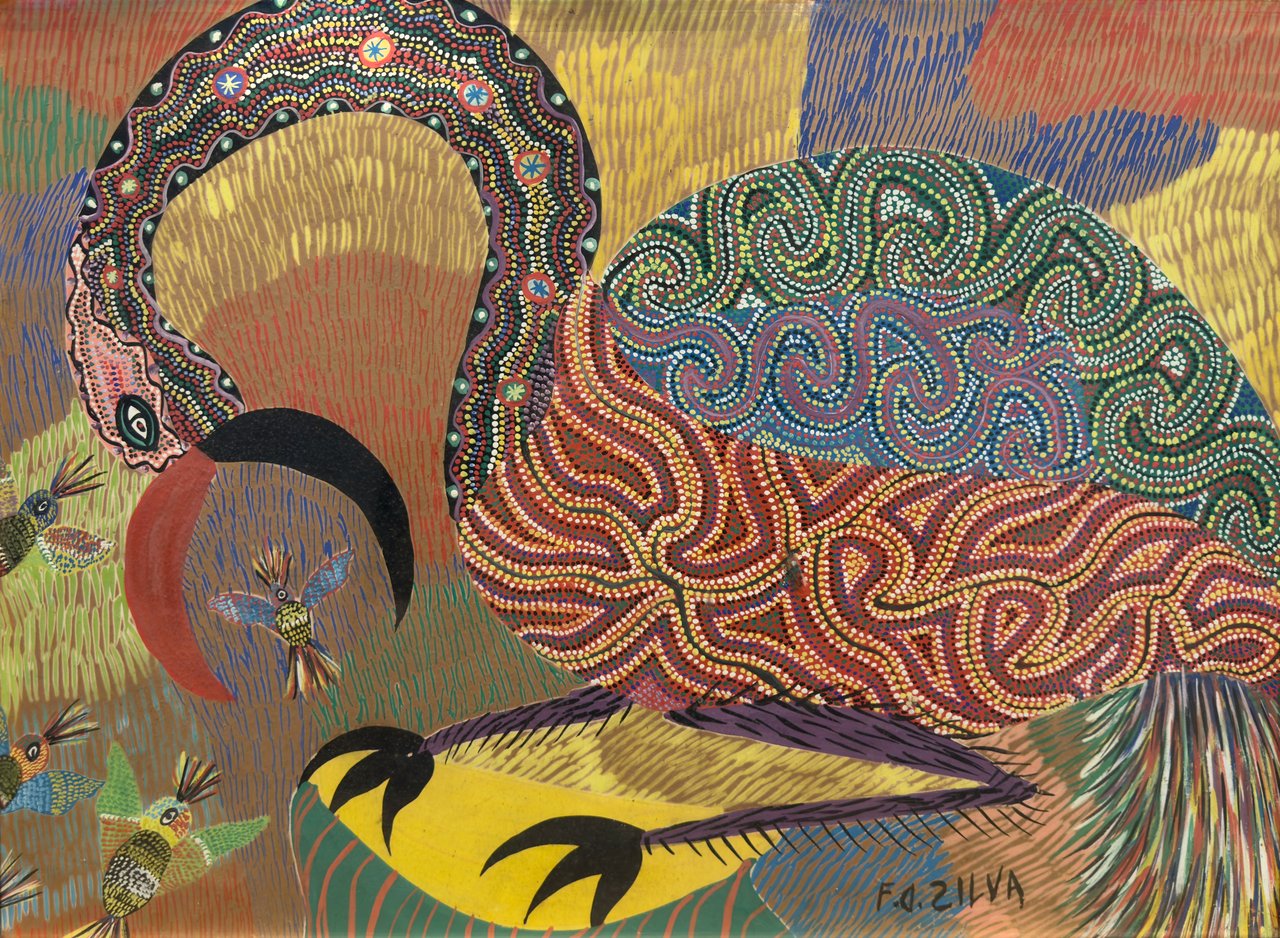
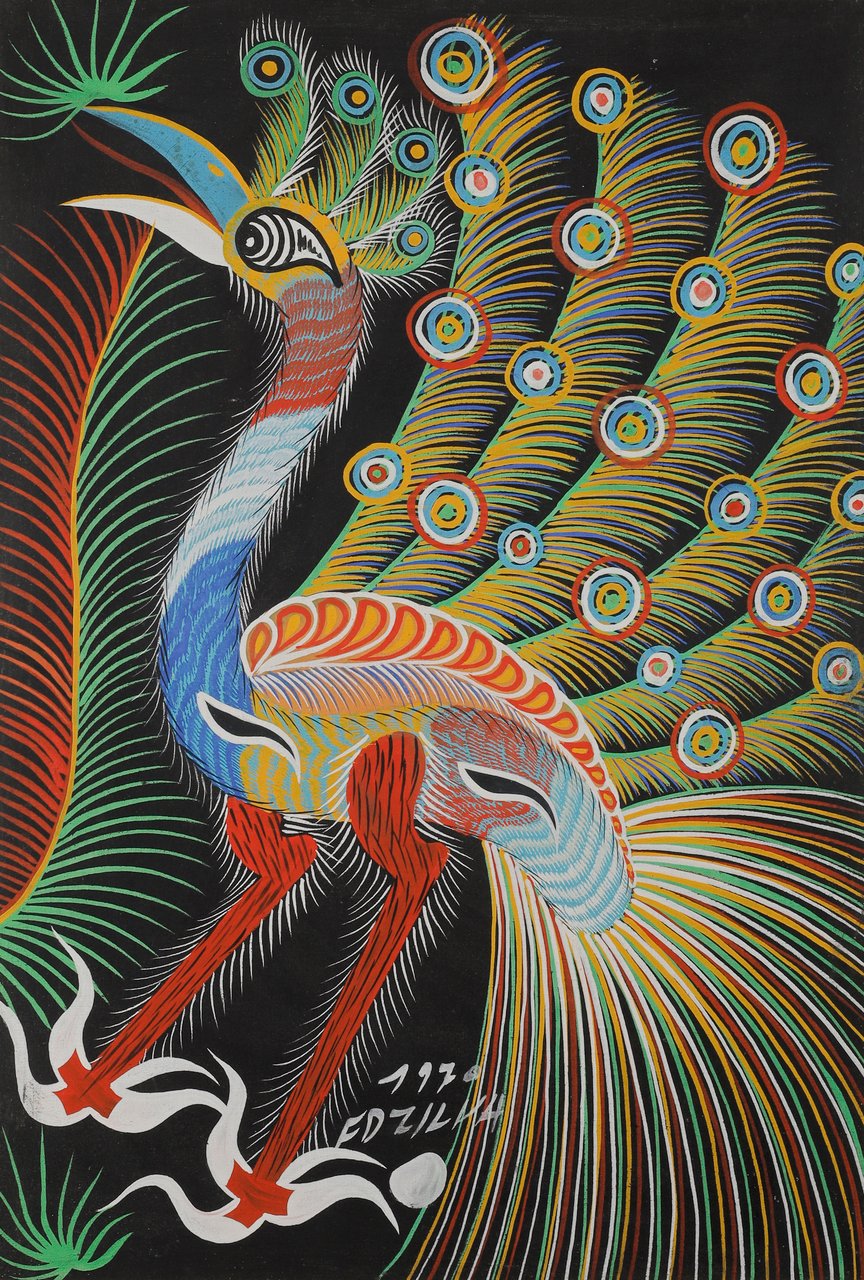
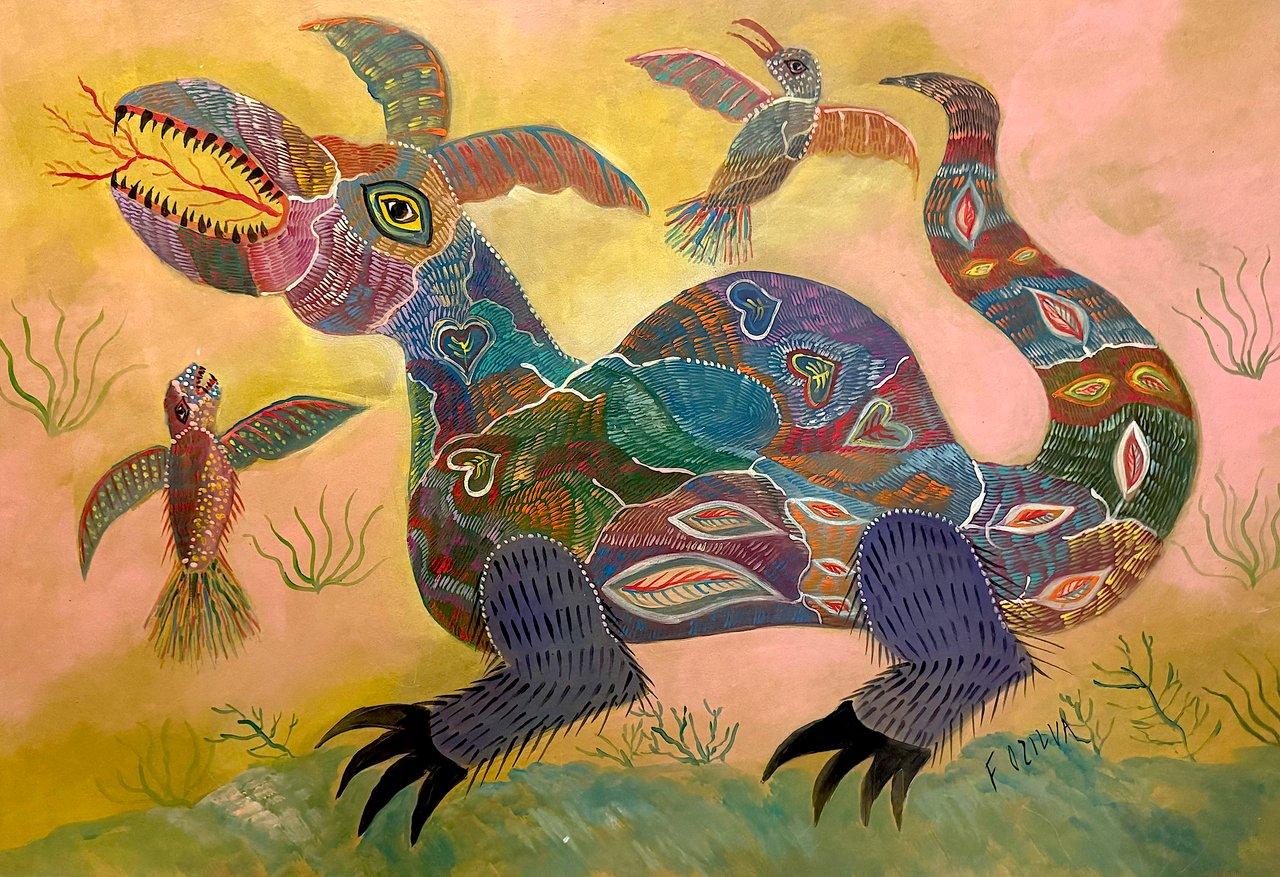
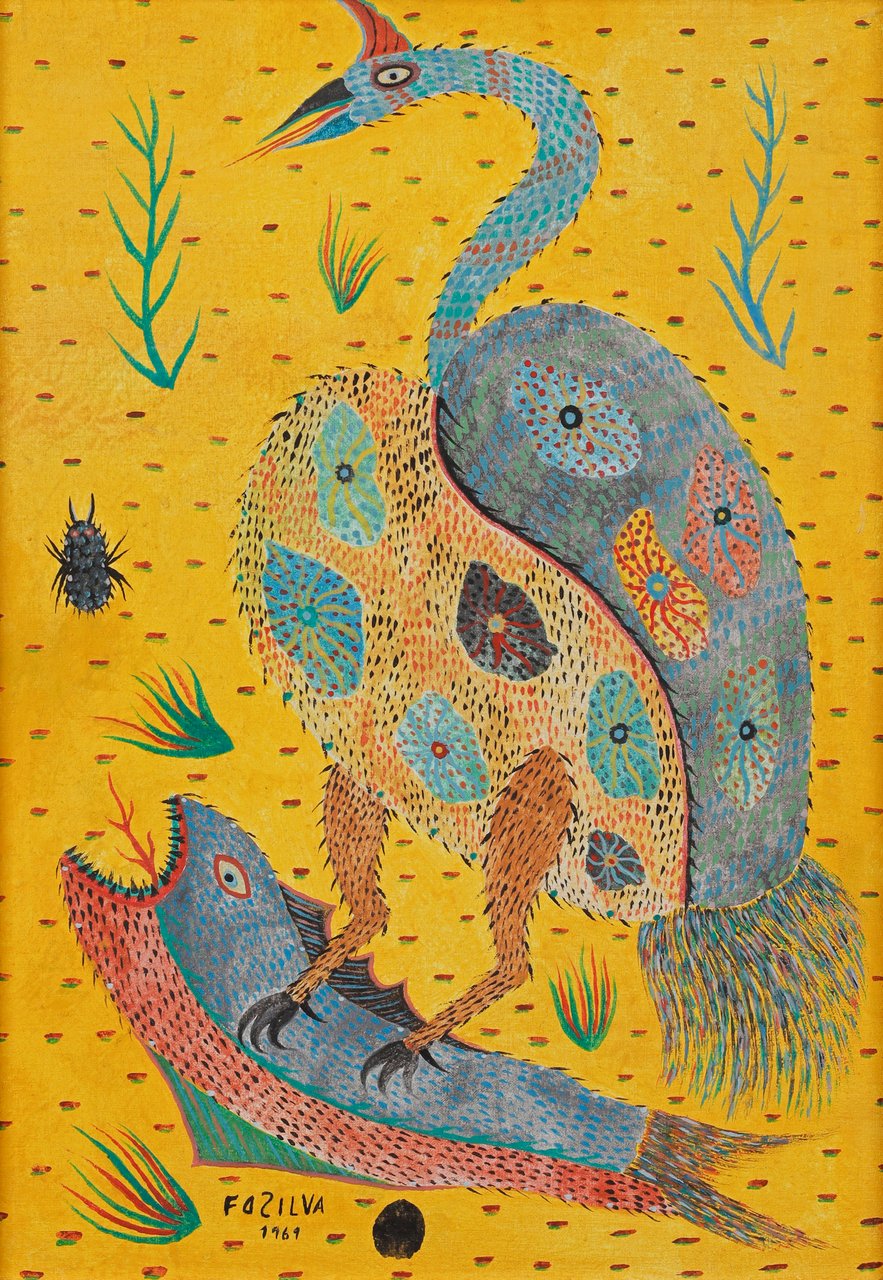
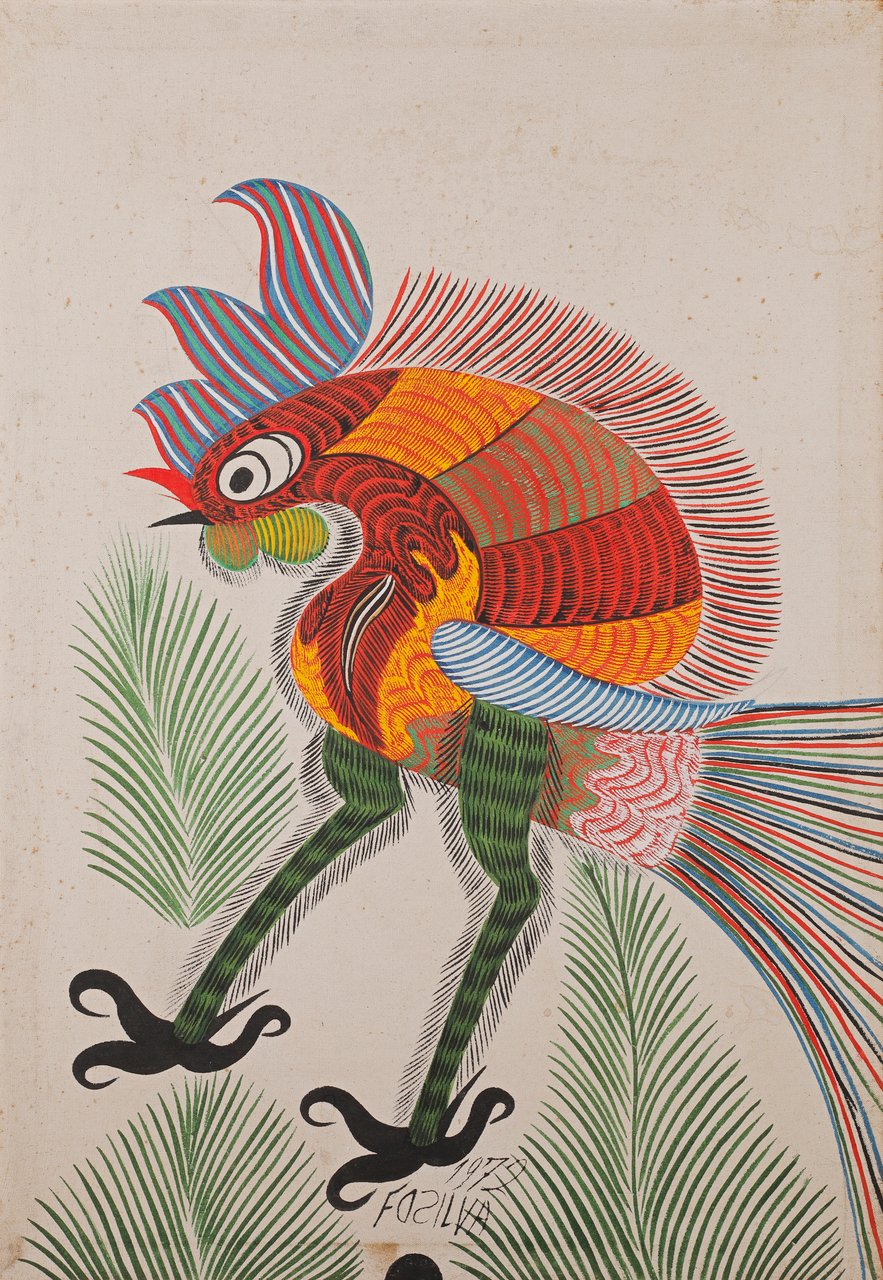
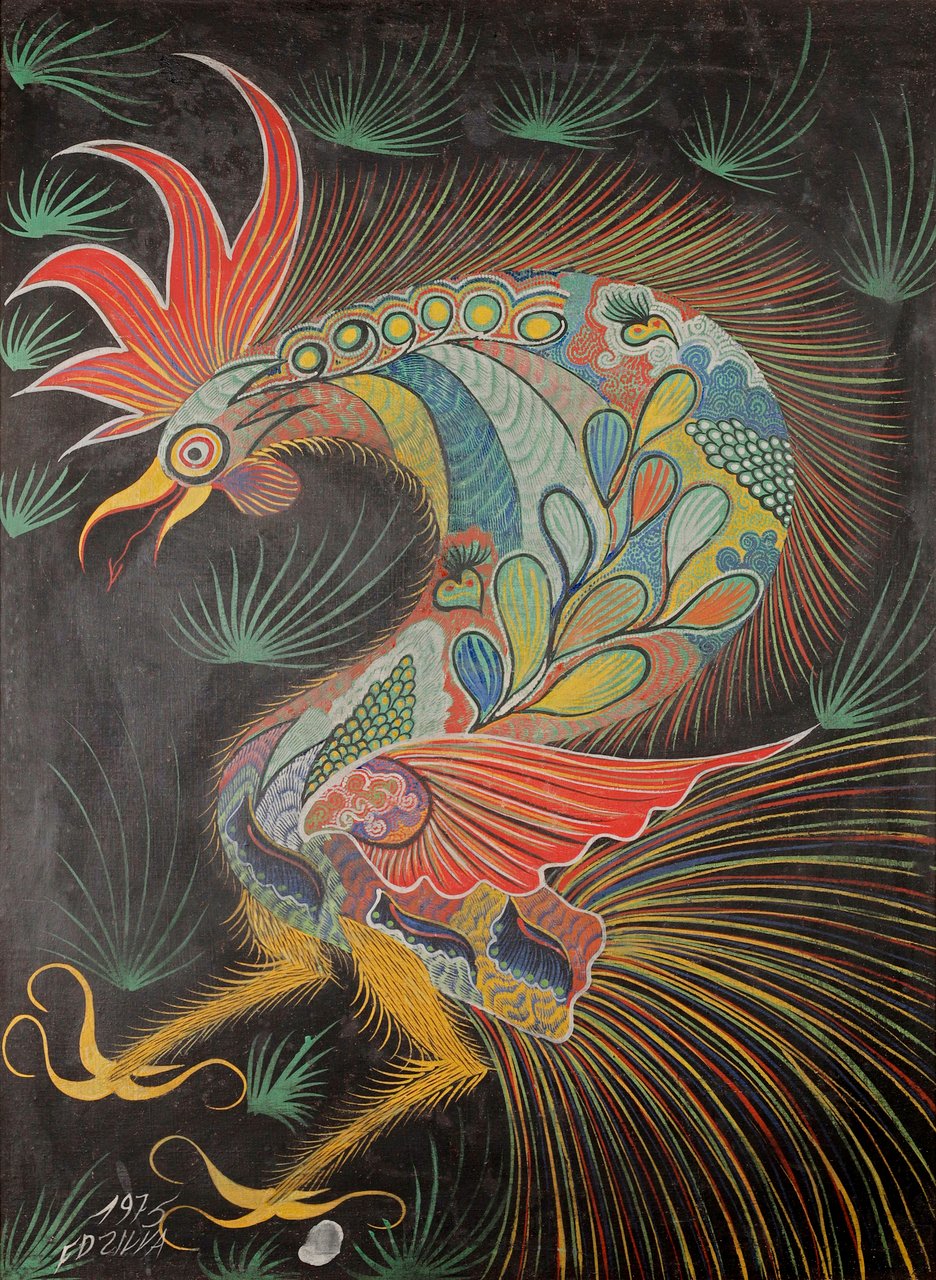
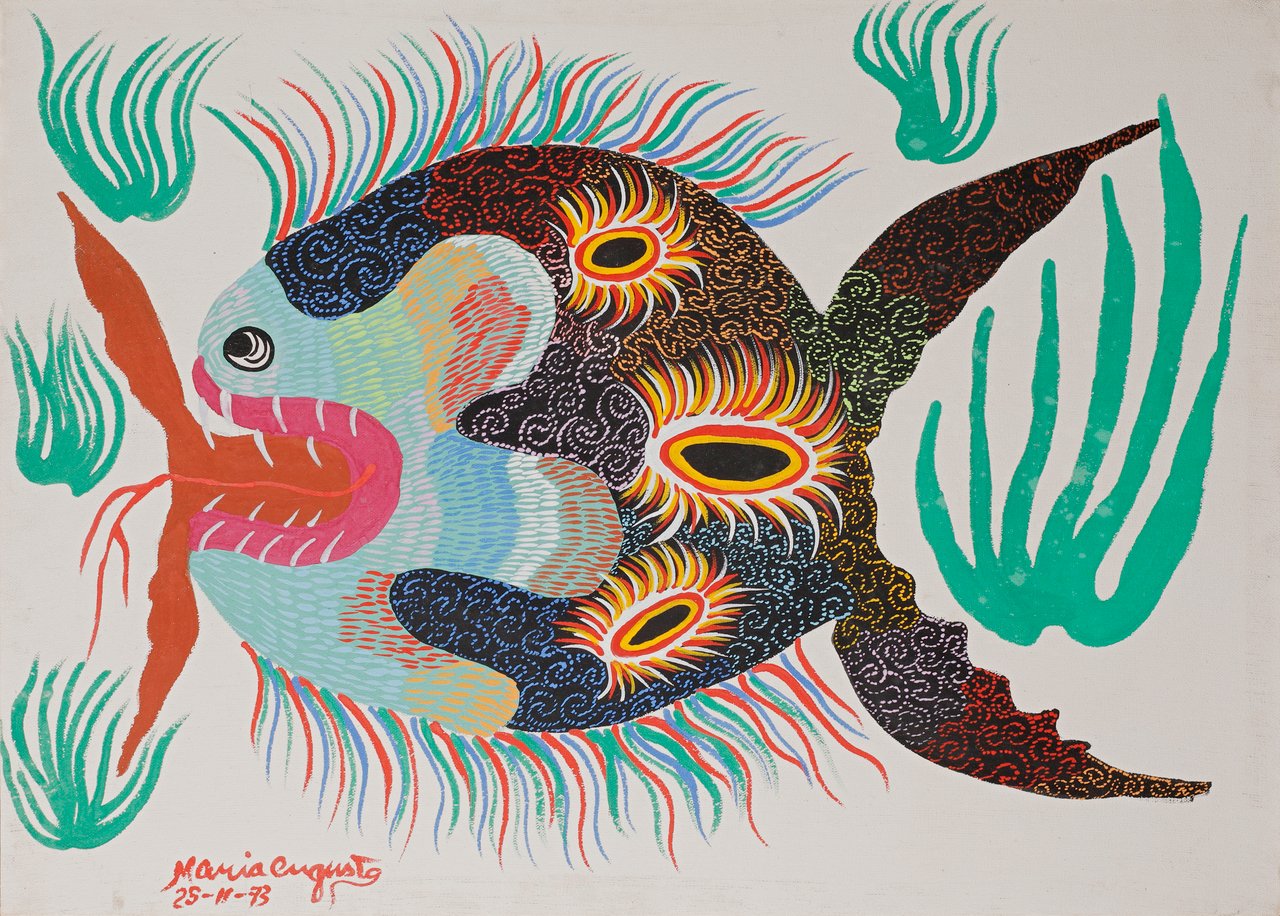
Gouache dries matte. The oil-like sheen of many Pirambu works comes from the varnish, applied at the end with a flit pump, the small insecticide sprayer; Garcia recalls that the school never painted in oil. In the master’s gouaches in the collection, the hand shows up close: grounds made of short strokes in Fish and in Peacock and Fantastic Bird, rows of beads in Fantastic Bird and Fledglings, paper marked by time in Fantastic Birds and Butterfly. In Fantastic Fish, by Maria Augusta, the weave of the canvas shows through the paint.
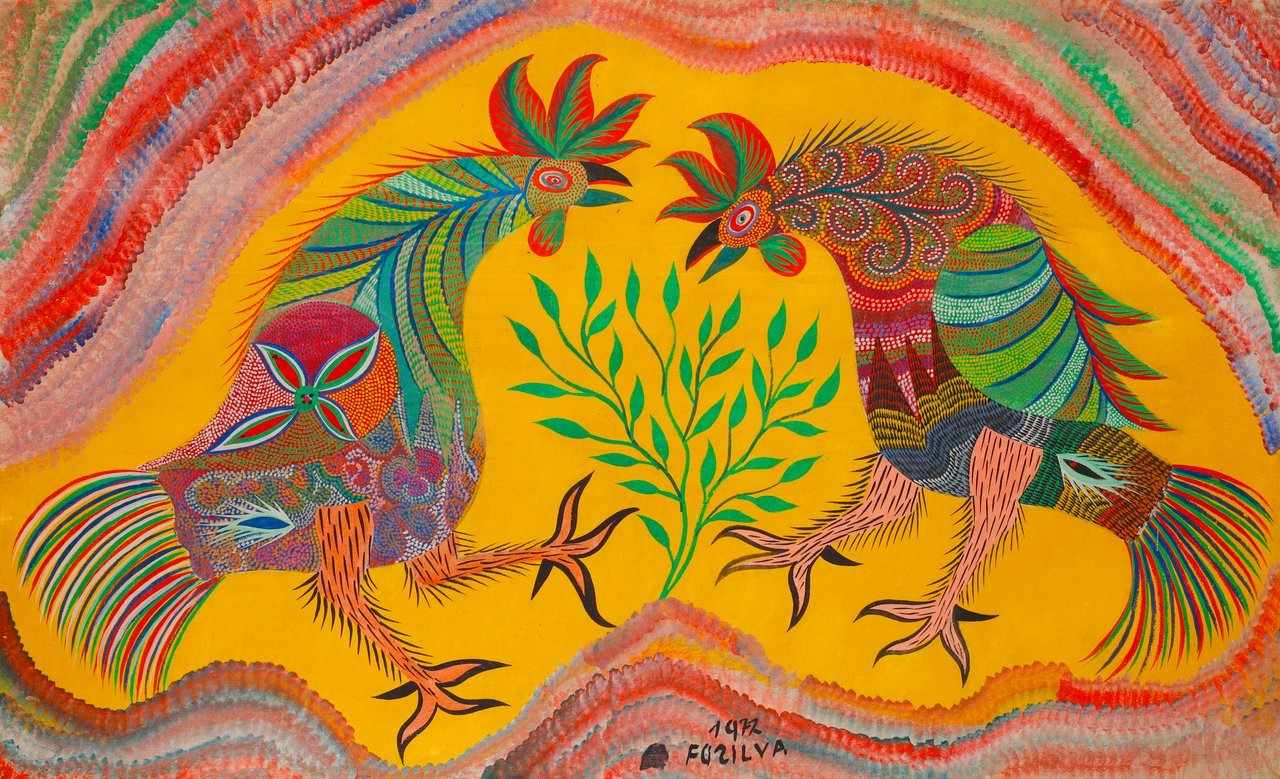
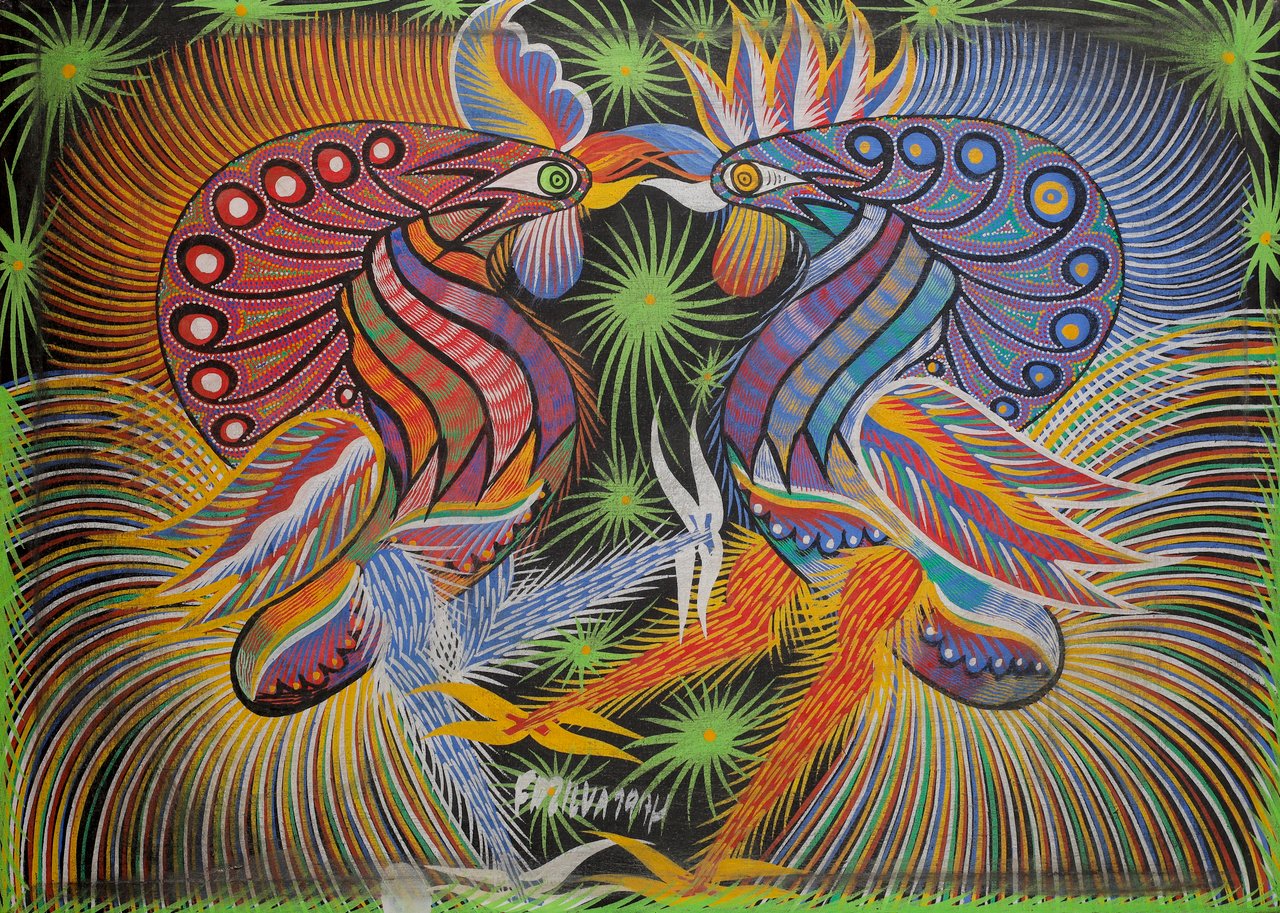
Outside Brazil, the naïf art museum in Laval, France, holds Animaux fantastiques, a gouache of 1966, and the Rollins Museum of Art, in Florida, holds Fighting Roosters, a gouache on canvas of 1974.